📞 Call us: +91 7721099005 WhatsAppChat Now 📍 Find us
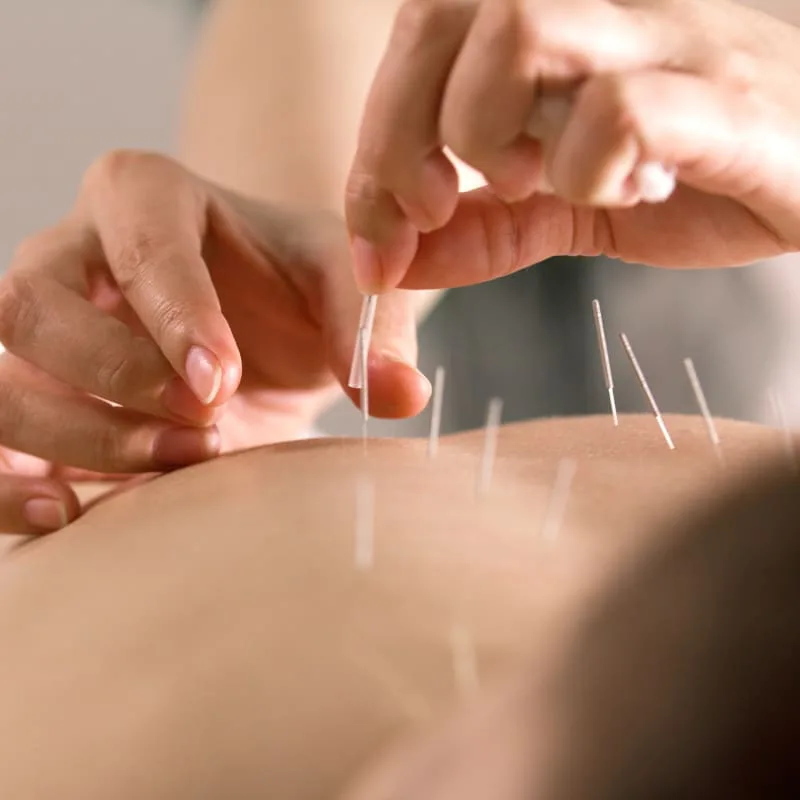
Dry needling trigger point therapy at Rebalance Physiotherapy Clinic Whitefield

Dry Needling in Whitefield, Bangalore

Dry needling is an advanced physiotherapy technique that involves inserting thin, sterile needles into myofascial trigger points — the tight, painful knots in muscles that cause referred pain and restricted movement. Unlike acupuncture, dry needling is based on modern neuroanatomy and muscle physiology.

At Rebalance Physiotherapy Clinic in Whitefield, Dr. Vaishnavi Tammewar uses dry needling to effectively treat stubborn muscle pain, tension headaches, and movement restrictions that don't fully respond to conventional manual therapy alone.

What is Dry Needling?

Trigger points are hyper-irritable spots within a taut band of muscle. They cause local pain, referred pain (pain felt in a different area), and muscle weakness. Dry needling works by inserting a fine needle directly into these trigger points, causing a local twitch response that releases the muscle contraction.

This twitch response resets the muscle's resting tone, improves blood flow to the area, and reduces the chemical irritants that cause pain. The term "dry" simply means no medication is injected — the needle itself is the therapeutic tool.

Who Needs Dry Needling?

  • People with persistent muscle knots that don't resolve with stretching or massage
  • Patients suffering from tension headaches or migraines originating from neck/shoulder trigger points
  • IT professionals with chronic neck and upper back pain from prolonged computer use
  • Athletes with muscle tightness, tennis elbow, or plantar fasciitis
  • Individuals with TMJ (jaw) pain or clenching-related facial tension
  • Anyone with myofascial pain syndrome or fibromyalgia-type symptoms

Benefits of Dry Needling

  • Rapid pain relief — many patients feel significant improvement within 1–2 sessions
  • Releases deep trigger points — reaches muscle knots that surface-level techniques cannot fully address
  • Restores muscle function — resets abnormal muscle tension and improves strength
  • Reduces referred pain — treats the source, not just the symptom (e.g., a shoulder trigger point causing arm pain)
  • Improves range of motion — immediately increases flexibility in the treated muscle group
  • Evidence-based — supported by extensive research for conditions like neck pain, low back pain, and tennis elbow

What to Expect During Treatment

After identifying trigger points through palpation and movement assessment, your physiotherapist inserts a thin, sterile needle into each trigger point. You may feel a brief twitch or cramping sensation — this is the therapeutic twitch response and indicates successful targeting of the trigger point.

The needle is typically left in place for a few seconds to 1–2 minutes per trigger point. A session treats 3–8 trigger points and lasts about 20–30 minutes. Mild soreness in the treated area for 24–48 hours is normal. Most patients notice significant improvement after 2–4 sessions.

Why Choose Rebalance for Dry Needling?

  • Dr. Vaishnavi is trained and experienced in advanced dry needling techniques
  • Dry needling is combined with manual therapy and corrective exercises for lasting results
  • Sterile, single-use needles — strict infection control protocols followed
  • Conveniently located in AECS Layout, Whitefield — close to Brookefield, Marathahalli, and ITPL

Frequently Asked Questions

Is dry needling the same as acupuncture?

No. While both use thin needles, they are fundamentally different. Acupuncture is based on traditional Chinese medicine and energy meridians. Dry needling is based on modern musculoskeletal anatomy and targets specific trigger points in muscles. The assessment, technique, and treatment goals are completely different.

Does dry needling hurt?

The needle insertion is usually painless — the needles used are much thinner than injection needles. You will feel the twitch response, which is a brief cramping or aching sensation lasting a second or two. Most patients tolerate it very well and find the relief afterward worth it.

How quickly does dry needling work?

Many patients notice improvement after the very first session. For chronic conditions, 3–5 sessions spaced a week apart typically produce significant and lasting results. The treatment effect builds progressively with each session.

Are there any side effects of dry needling?

The most common side effect is mild muscle soreness in the treated area for 24–48 hours, similar to post-workout soreness. Occasional minor bruising may occur. Serious side effects are extremely rare when performed by a trained physiotherapist.

Can dry needling treat my headaches?

Yes, dry needling is very effective for tension-type headaches and cervicogenic headaches (headaches originating from neck muscles). By releasing trigger points in the neck, upper trapezius, and suboccipital muscles, many patients experience significant reduction in headache frequency and intensity.

Related Services

Ready to Start Your Recovery?

Book an appointment today and take the first step toward pain-free living.

Book Consultation

Or call us: +91 7721099005